The Universal Cheat Trick That Works in Any Game (Feat. Cheat Engine)


Hello to gamers everywhere,
Every so often while I'm playing a game,
a certain thought crosses my mind.
Usually during those stretches that require what we call "nogada" (grinding).
Games are supposed to be fun,
so why am I putting myself through this???
If you're someone who genuinely enjoys the grind itself,
this might not apply to you.
But I'm a light-user gamer who's really here for
the game's own Narrative, its story,
so whenever I hit one of these grind walls,
I feel like I can barely breathe.
So here's a method I've been using here and there,
and since it seemed like it could help other people too,
I decided to write it up!!
- Why is this even possible?
If you only care about how to actually apply cheats, feel free to skip this part.
For those who are curious, let me give a quick conceptual explanation.
How do games and programs actually run?
They load data into memory,
and the CPU uses those values.
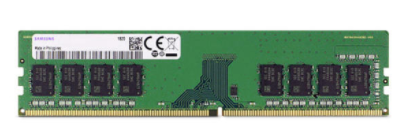
Have you ever seen something that looks like this?
It's called a RAM card.
Also known as main memory — this is where data values get loaded.
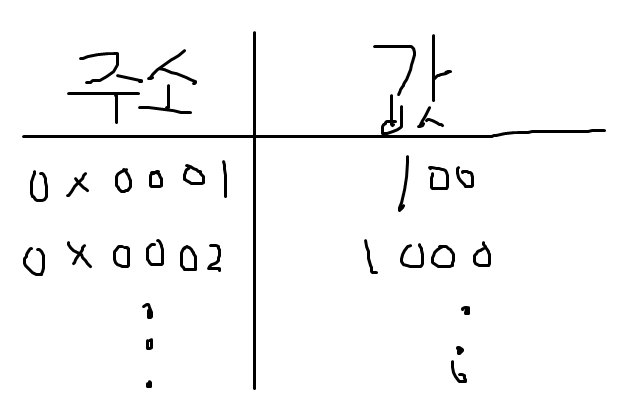
The program loads data
into memory and then references those values.
Let me give an example.

Let's say my character attacks the opponent's character.
How about we implement the attack mechanism like this?
Take the attack value, compare it against the opponent's defense, and calculate the actual damage.
[Actual damage = my attack power − opponent's defense (excluding negative values)]
Attack function runs => HP is reduced based on the actual damage.
I've simplified this quite a bit.
(Of course, real games each have their own different functions.)
What we need to pay attention to here
is that the programmer only implements the function —
the actual data is pulled from memory.
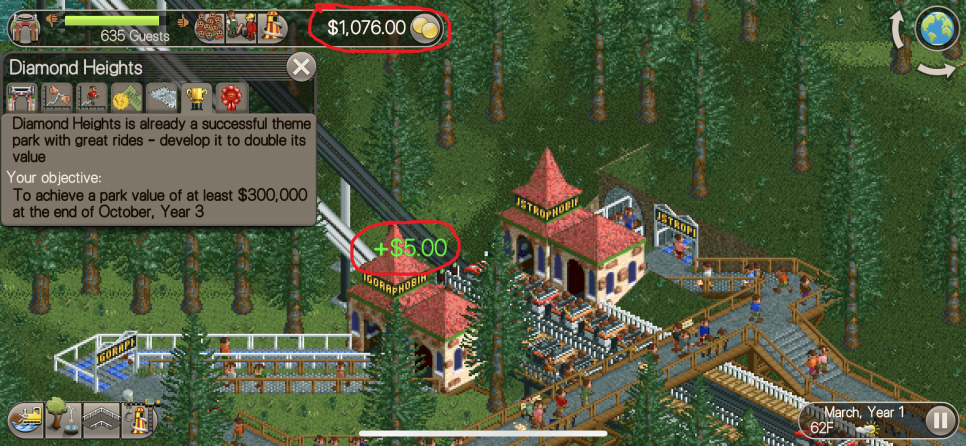
The resources and data inside the game
don't exist in some other world —
they exist in me.mo.ry.
In other words, the program itself doesn't inherently "know" each value.
It doesn't know this data — it just reads and looks at it.
So if we could manipulate that memory,
couldn't we also manipulate the outcome inside the game???
If we can just find where in memory
this data is stored,
we can manipulate it.
"I want to boost my money."
Then all you have to do is find the memory location for money and change the number.
I'm going to show you how to find memory addresses,
and since I needed to explain why we're looking for memory in the first place,
I gave that brief conceptual explanation up front.
- How do you actually do it?

There's a program that lets you search for a data value,
find its location in memory,
and change that value.
The best-known one is a program called "Cheat Engine."
You can download it from the site above.
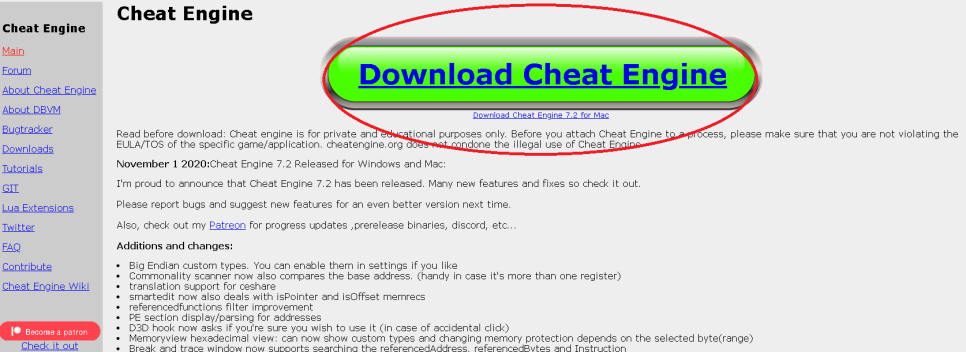
When you land on the site, you'll see
"Download Cheat Engine" written in big letters at the top.
Click that button and the installer downloads immediately.
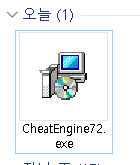
Once the download finishes, run it and install it.
- Installation process
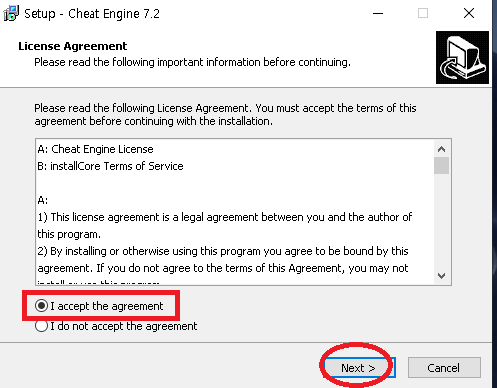
Check "I accept the agreement"
and click Next >.
It's the same as installing any normal program.
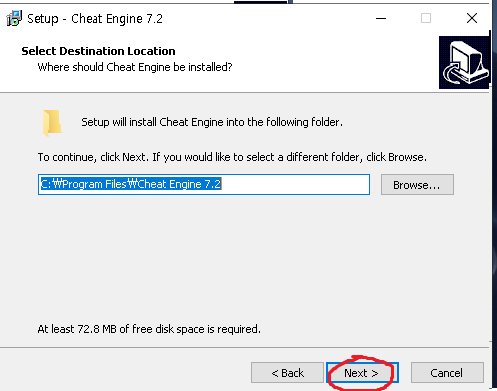
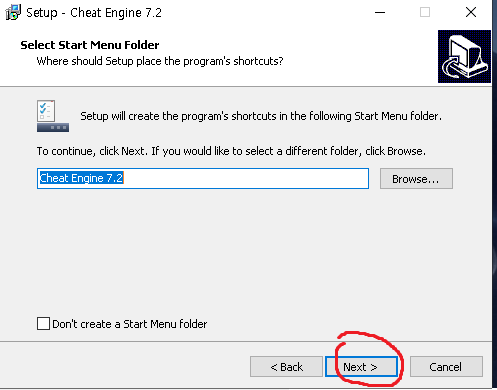
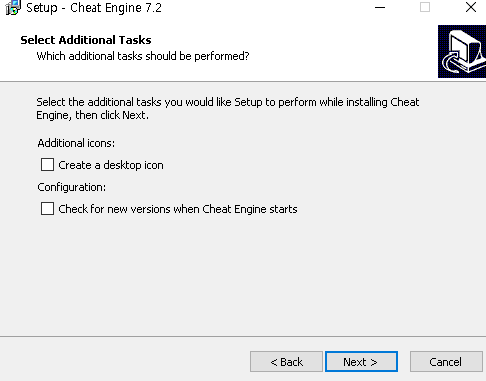
Keep clicking Next and you'll come across a couple of checkboxes.
The first checkbox asks whether you want a desktop shortcut created.
The second checkbox asks whether Cheat Engine should check for new versions when it launches.
I left both unchecked,
but feel free to pick whatever you prefer and click Next.
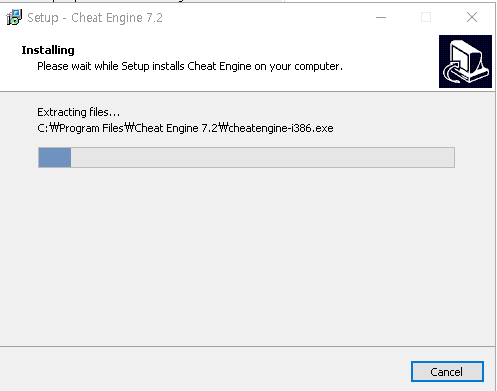
The installation runs, and once you click Finish, the install is done.
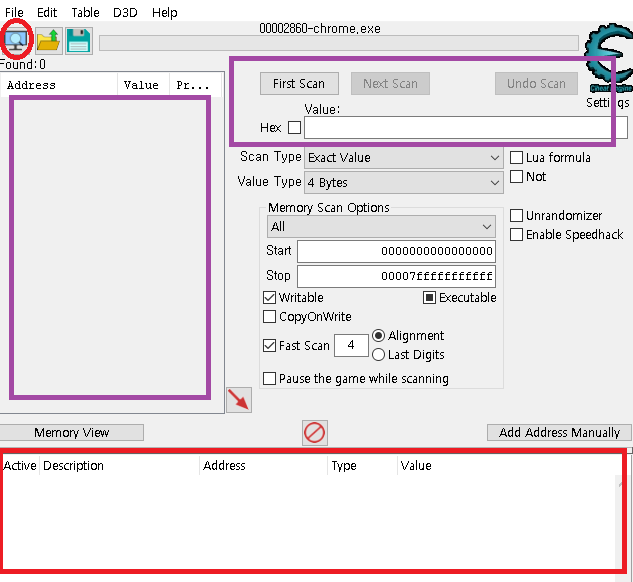
This is Cheat Engine's main screen.
The part I've circled in red
is the icon for picking the process you want to scan memory on,
the purple box on the right is where you type the value you want to search for,
and the purple box on the left is where the found memory addresses show up.
The red boxed area at the bottom
is where you place the memory addresses you want to manipulate.
I'll cover the rest of the interface in an advanced-level post.
Explaining each feature one by one probably feels a bit overwhelming,
but once you follow along and get a feel for how these features work,
you'll be able to apply this to any game.
- Assassin's Creed: Odyssey
I'll use this game
to walk you through the mechanics
of changing a value in memory.
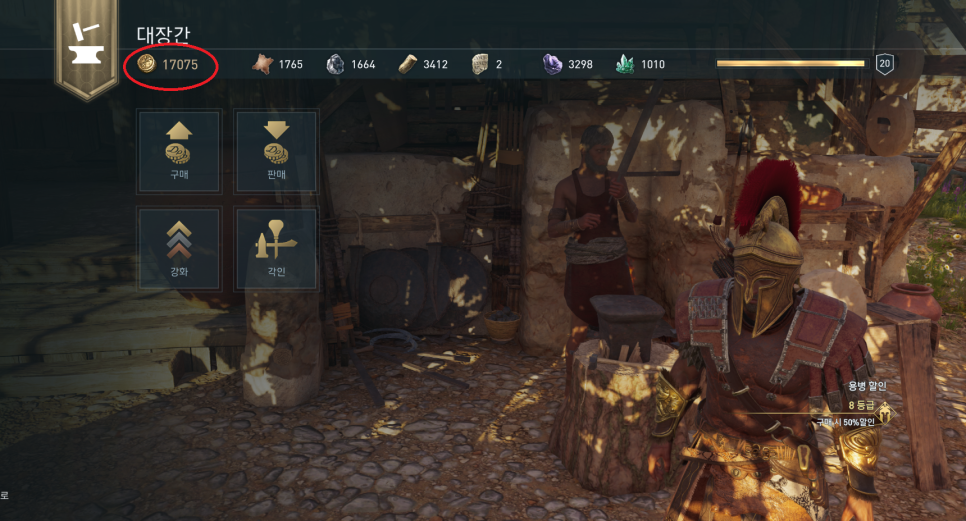
Our protagonist here...
suddenly wants to be rich.
Let's use Cheat Engine
to make that happen.
- Enter the initial value.
I currently have 17075 gold.
Let's search for that and find out where it lives in memory.
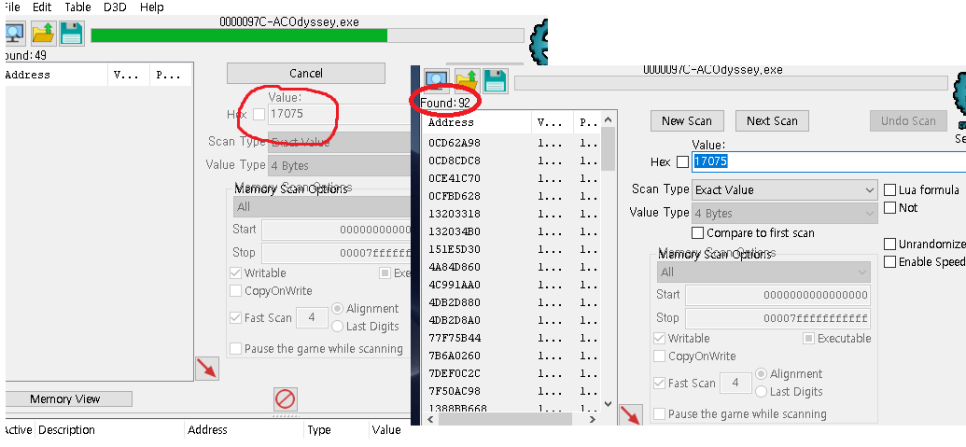
I searched for the value 17075
and got 92 results.
That means there are 92 pieces of data in memory that currently equal 17075.
Among these, we'll track which ones change
to figure out where the money value is actually stored.
- Enter the changed value.

Let's sell a weapon to change the money amount.
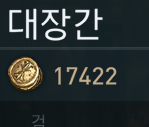
It went from 17075 gold to 17422 gold.
Now, in Cheat Engine, we search among those results for the ones that changed to 17422.
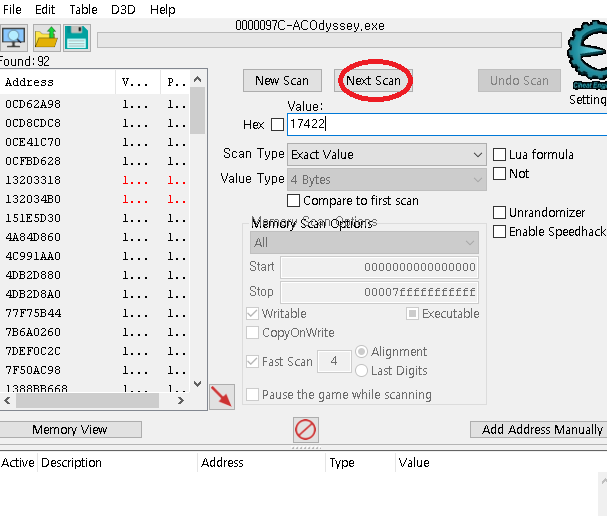
The important thing here
is that you need to click "Next Scan," not "New Scan."
"New Scan" means starting a brand-new search from scratch,
while "Next Scan" means searching again within the results you already have.
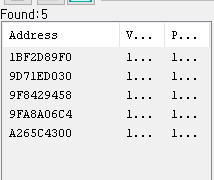
Now we're down to 5 values.
One of these is the data where the money is stored.
To be sure,
let's change the value one more time and search again.
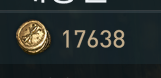
I sold one more item, bringing it to 17638 gold.
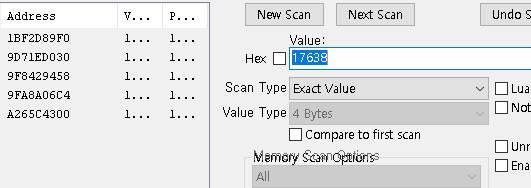
Even after searching again, we still get 5 addresses.
Normally, a single value is stored at a single memory location,
but modern games often split it across multiple addresses
to make memory tampering harder.
Kind of like Exodia...
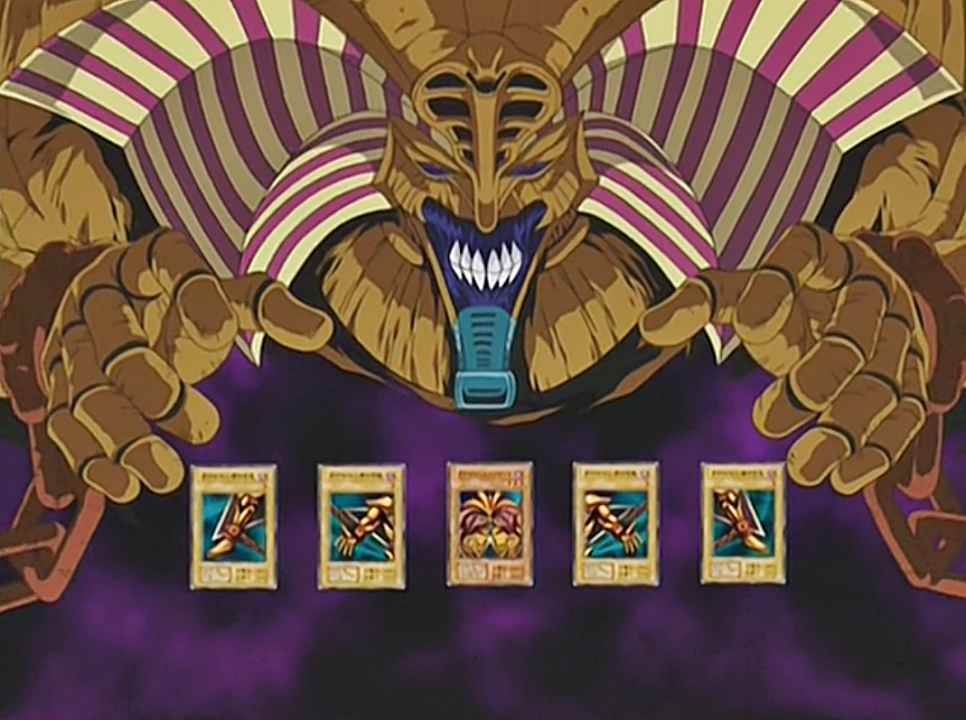
If you only edit one of these,
the actual value won't change.
(Changing just one breaks the data's consistency.)
Let's use the method of editing all five values at once.
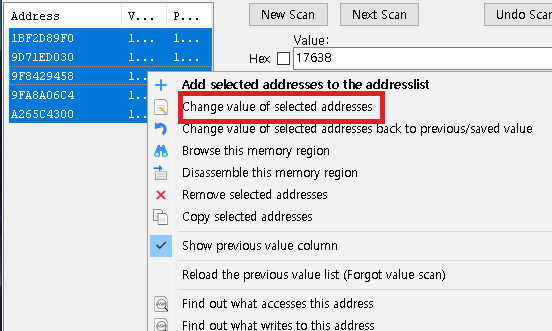
Select all five values at once,
right-click, and the menu above pops up.
From there,
click "Change value of selected addresses."
This means it will change the values at all the selected addresses.
You can also just press (Ctrl + E).
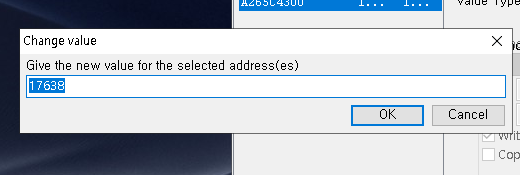
Here, you enter the value you want to change it to —
just adjust it to whatever number you want.
In my case, setting it to something like 999999999
kind of kills the fun.
Use just as much as you need, in moderation.
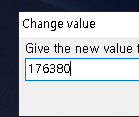
I modestly went with just 10x the value.
Let's go back to the game
and see if the value actually changed.
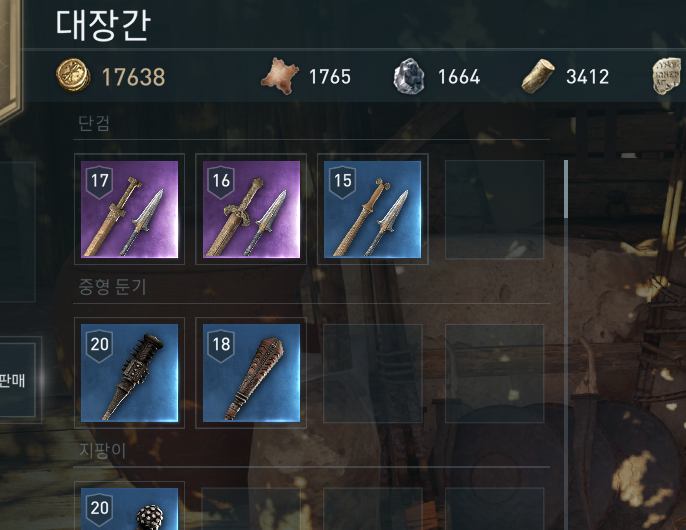
Back in the game, there's no change yet.
That's because the value changed in memory, but it hasn't synced yet.
Once you buy or sell something and trigger a value change,
the actual memory value will show up.
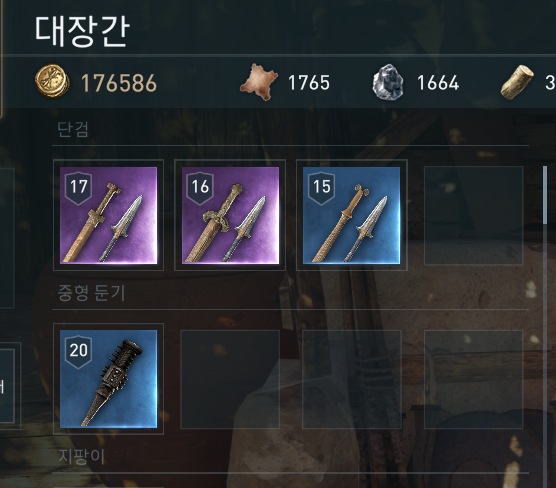
I sold one item and my money went up, right?
176380 gold plus the amount from that sale came out to 176586 gold.
At this point,
go ahead and save your game.
Pretty easy to apply a cheat key, right???
You can change data values this way in any game.
This is also sometimes called "editing."
Some of you might think I just handed you a magic spell.
But that's not really true.
This method doesn't work on online games.
That's because
the data that actually matters
is stored on the game company's servers.
If we could get into that server,
we could modify the data — but that's no easy task.
For games where the data
is loaded into our own computer's memory,
this kind of memory tracking and editing is possible.
If you're ever stuck and frustrated while gaming,
give this method a try — it might help ^^
Overusing it kills the fun fast, so use it in moderation!
Excessive grinding brings fatigue and stress,
but there's definitely enjoyment in putting in a reasonable amount of effort too.
That's today's exploration~
That's all for now ^^
댓글 0